
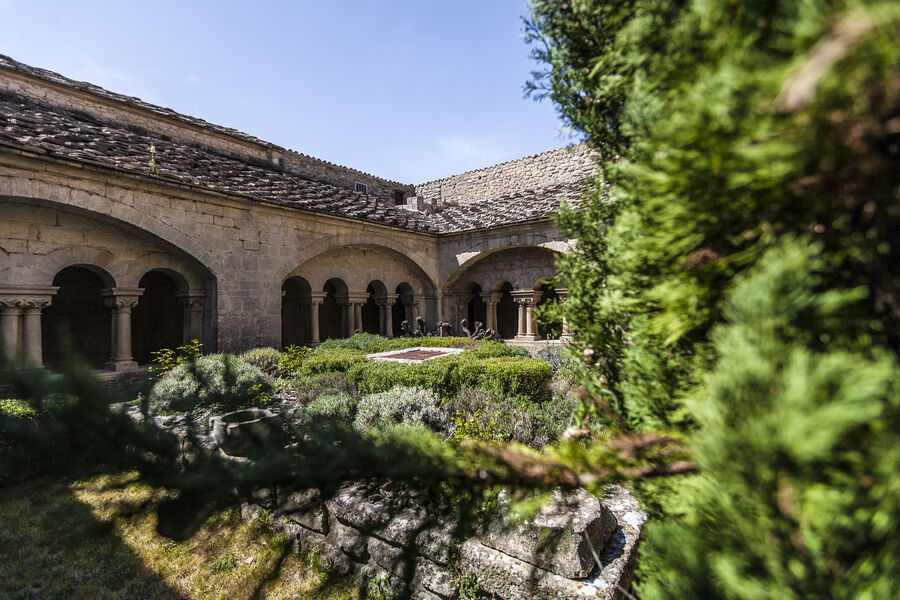
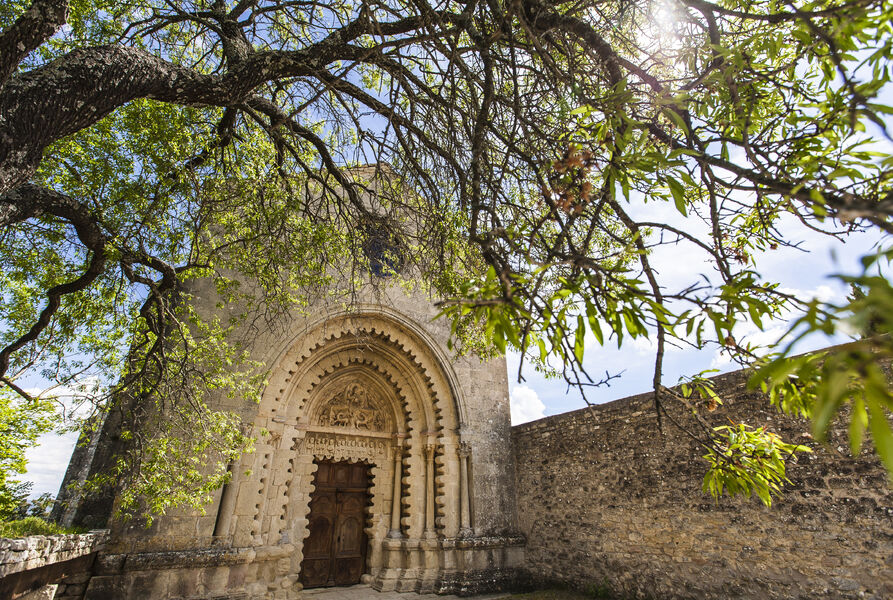
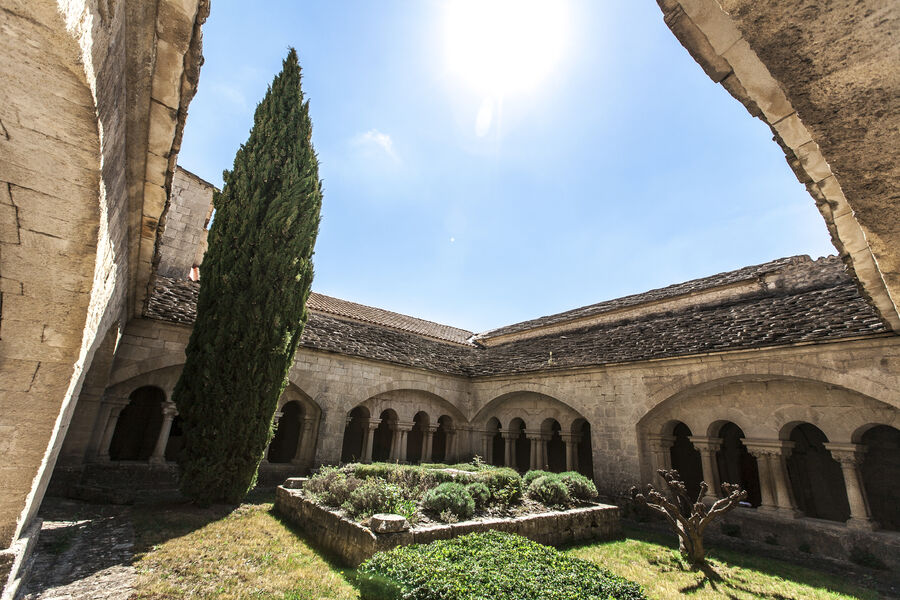
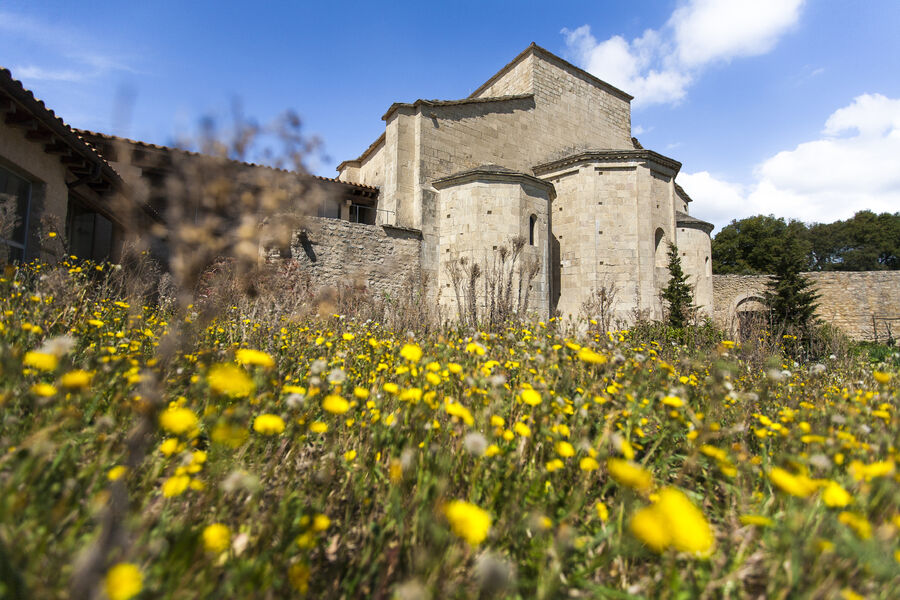
The monastery of Ganagobie, classified as a Historic Monument, is located on the bank of the Durance, between Peyruis and Lurs, on the plateau crowned with rocks. It is a Clunsian priory founded around the XNUMXth century.
Description
The church, which houses the 12th-century mosaic, can be visited every day of the year, summer and winter, from 2 p.m. to 5:30 p.m., except Mondays. Mass is held on Sundays at 9 a.m.
The "Allée des Moines" (Monks' Walk), which leads to the eastern edge of the plateau overlooking the Durance Valley, offers a beautiful panorama. Beautiful walks are possible around the plateau.
Between Sisteron and Manosque, the Benedictine monastery of Ganagobie is perched on a steep plateau from which one can admire the entire Durance Valley. Of the buildings, only a few vestiges from the Romanesque period remain (church, cloister, convent buildings). The abbey boasts a remarkable mosaic from the early 12th century, which constitutes a major element in the history of mosaic art in France. And what about its stained-glass windows created by the Korean artist, Father Kim En Joong!
Mosaic: a major achievement in the history of French art.
The church is remarkable for its early 12th-century mosaic, which covers the choir floor over an area of 72 m². It is a key element in the history of mosaic art in France. It takes the form of richly decorated carpets, arranged side by side and tied with braids. A harmony of black, white, pink, and red, in a composition of rare balance for the time, draws a fabulous bestiary of monsters destined to fight against the forces of Satan. Two helmeted and armed horsemen represent the ideal of chivalry: courage and virtue.
The nine stained-glass windows of Father Kim En Joong.
The church's original, highly colored stained-glass windows had not survived the destruction of the Revolution and had been replaced by plain glass. Archaeological excavations carried out in the church in the 1960s uncovered many fragments.
Many artists were then approached to imagine the future stained-glass windows until the Father Abbot discovered the works of Father Kim En Joong during a trip to Rome. The latter was trained in painting at the School of Fine Arts in Korea by professors who were themselves influenced by the Japanese pro-impressionist movement, then he moved to Europe in the 60s.
He is notably responsible for the creation of the stained glass windows of the Évry Cathedral, Narthex and the Perguet de Benodet Chapel in Finistère. Chartres Cathedral is for him a source of ultimate spiritual and artistic inspiration. He will never cease to seek to put his art at the service of a search for the passage from darkness to light. "The stained glass window is the eye of a church, it must be vigilant and transmit light."
The genesis of the Ganagobie stained glass windows
After a long stay at the monastery, during which Father Kim En Joong shared the daily life of the Benedictine monks, observing and absorbing day after day, hour after hour, the different effects of light in the church, he returned to Chartres and set to work in the highly renowned Loire workshops. Between 2005 and 2006, he created a 12 m diameter rose window as well as 8 Romanesque bays covering 8.50 m2 by skillfully combining colorless glass, enamels and cements, grisaille and silver yellow.
Inaugurated in 2006, Kim En Joong's stained-glass windows symbolize for the Ganagobie community "an invitation to see beyond, to see further. They offer themselves to our gaze as a sign of a generous superabundance, a grace... In a measured, calculated, counted universe, they are the already realized promise of a free, gratuitous and harmonious world."
Rates / opening
Prices
Free access.
Opening
All year, every day.