
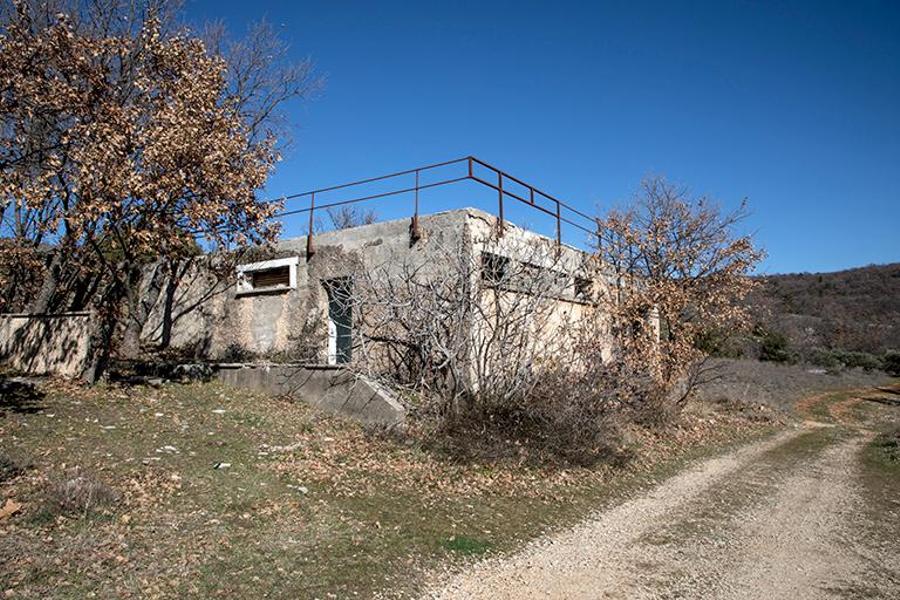
This former forestry hamlet transformed into a place of remembrance bears witness to the reception of 25 Harki families repatriated from Algeria in 1962.
Description
The first village in the Provence-Alpes-Côte d'Azur region to welcome Harkis families repatriated from Algeria and the first forestry hamlet to open. Ongles welcomes 25 families, approximately 133 people, originally from Palestro.
Their arrival in France and then in Ongles was organized by Lieutenant Yvan Durand, head of one of the seven SAS (specialized administrative section) created in the department of Grande Kabylie. He left the army to repatriate "his" former auxiliaries.
On September 6, 1962, the group of Harkis was initially housed in tents provided by the army in an emergency and due to a lack of available accommodation.
A private plot of land was requisitioned on August 18, 1962, for the construction of prefabricated barracks. Once the structural work was completed, the Harkis took care of the finishing touches. However, the electrification, sanitation, and water supply work had to be carried out urgently.
On December 18, 1962, an association was created to help families, the Ongles Committee for the Support and Social Promotion of Muslim Repatriates from Algeria.
The forestry work camp opened on January 14, 1963 under the direction of Yvan Durand, then departmental inspector of forest hamlets. At that time, it welcomed 28 foresters, their wives, 5 adults (parents), 51 children under 10 years old, 9 aged 10 to 16, 14 of whom were in school.
The land was purchased by the State in January 1965. The closure of the hamlet was scheduled for the beginning of 1965 once the families had been relocated to Cannes and the Harkis had been reclassified into the city's municipal services.
Yvan Durand proposed converting the site into an educational center initially reserved for the children of Harkis. The 16 barracks comprising the forest hamlet were reused to house the children, staff members, or dedicated to stewardship. The CEO opened on March 1, 1965. In 1966, buildings were constructed for the pre-vocational training section and workshop equipment with machine tools. It would operate until 1971. The date of the hamlet's destruction is not known; the barracks were reportedly dismantled and sold to be reassembled in Ardèche.
Today, all that remains of the barracks are traces of the concrete bases on the ground, as well as debris (granite) and the remains of staircases and manholes. There are also the remains of a semblance of a semi-circular "parade" installed in front of the double-staircase porch of the hamlet chief's house. The ruins of some buildings, including a building housing a kitchen, which had been erected to meet the needs of the educational center, are still visible.
On July 5, 2016, Jean-Marc Todeschini, Secretary of State to the Minister of Defense, responsible for Veterans and Remembrance, unveiled a memorial plaque in tribute to the Harkis who lived in the hamlet.
Comfort and amenities
Services
Equipment
Rates / opening
Prices
Free access.
Opening
All year, every day.