
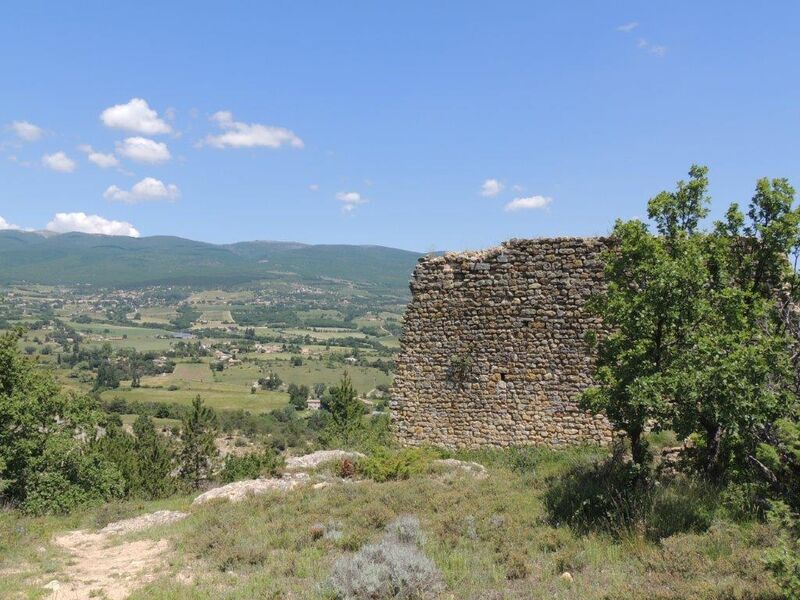
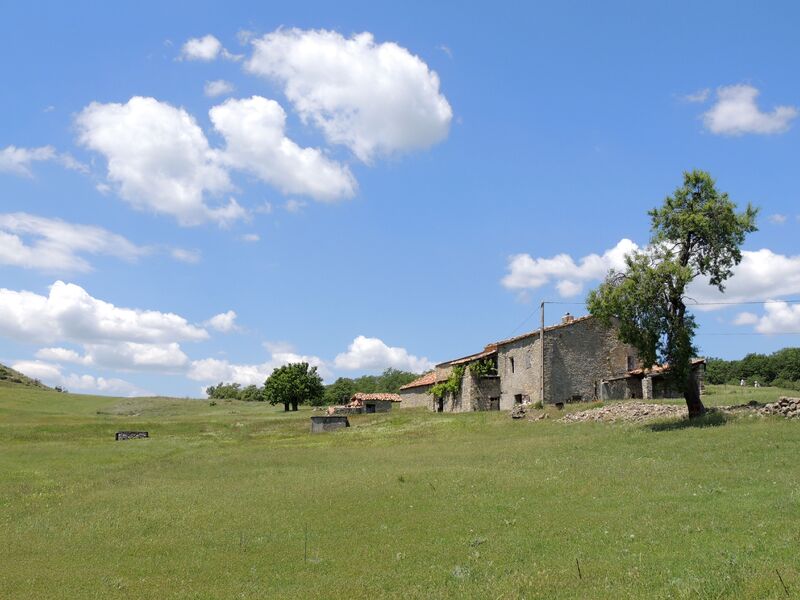
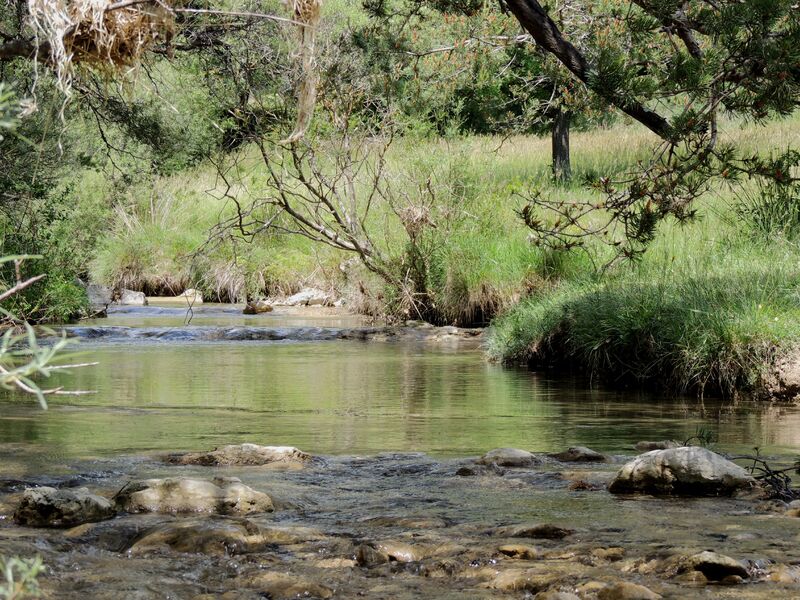

This commune is made up of 8 hamlets, the largest of which is Jacons, where the town hall and church are located. The ruins of old Montlaux overlook the Lauzon. Along this river are old mills: Moulin de Lure, Moulin de Pologne, etc.
Description
As in many other places, after the Wars of Religion, and no longer having any significant reason to seek protection, the inhabitants moved their homes to the plain. The medieval village of Montlaux was then located on high ground. Numerous walks, rivers, local producers' bistro, market every Monday at 18 p.m.
Traces of this village are still clearly visible; it was located below the castle and the church, and was also surrounded by an enclosure reinforced by two towers and pierced by two gates.
To this day, a whole series of ruins remain on the heights, overlooking the plain, including a substantial part of an ancient rampart. The restoration and enhancement of this highly historic site has begun.
Four fountains are also visible in the village, one of which bears the name “Fontaine du Roi”, recalling the existence, at the time, of a royal forest.
The Marseille painter Adolphe Monticelli (1824-1886), a precursor of Impressionism, made frequent stays in Montlaux, particularly at the Colombblancs. He was a renowned artist and a friend of Cézanne. Van Gogh had great admiration for Monticelli.
As recently as the beginning of the 7th century, the Lauzon River powered seven flour mills, only one of which remains. One of these mills, The Polish Mill, gave its title to a novel by Giono.
Explore these rural and historic places by following the hiking trails:
The Lauzon Trail
Duration: 2h30 - 8 km - 180 m elevation gain - Yellow and red then yellow markings
Departure from the Montlaux multipurpose hall
Old Montlaux
Duration: 2 hours - 6,5 km - 200 m elevation gain - Yellow and red then yellow markings
Departure from the Montlaux multipurpose hall
Comfort and amenities
Services
Rates / opening
Prices
Free access.
Opening
From 01/01 to 31/12 every day.