
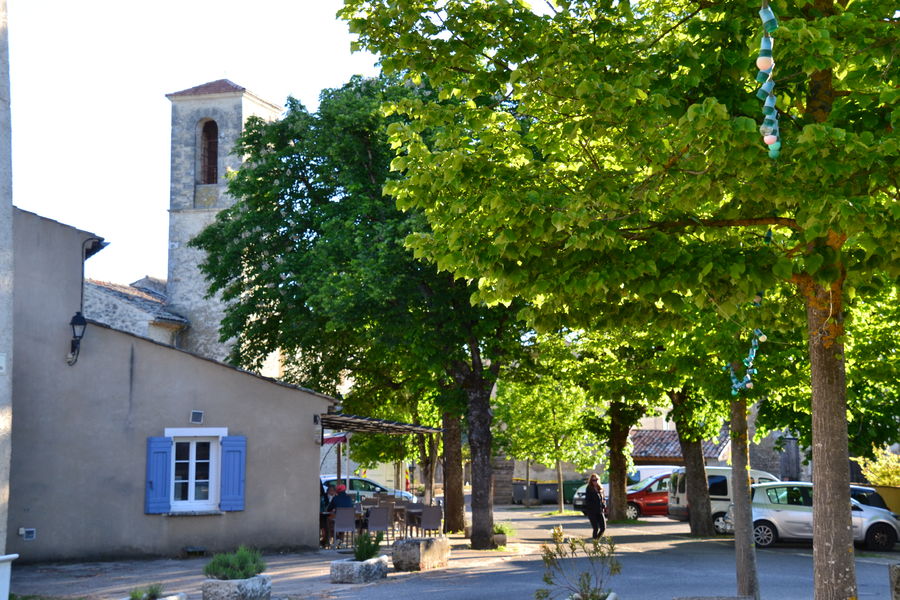
The village has wisely moved away from the national road to be able to live in peace and quiet.
Bordering one side of the square, the massive castle contains a magnificent 16th century fireplace decorated with plasterwork and the courtyard reveals a fountain of the same age.
Description
Originally, Niozelles, called Old Niozelles, was located on the heights of the hill.
There was then an oppidum, then a castle mound, and a small village.
The Via Domitia also passed through the village, proof of Roman occupation.
In the 14th century, epidemics decimated the population, and it was not until the 16th century that a new village appeared, but located below Vieux Niozelles, towards the Saint Etienne church.
A stately castle was also built in the 16th century. Its form evolved over the centuries until the Revolution, during which the towers were destroyed.
The southern gate of the village then made it possible to connect the castle to the crops via the staircase and the village to the washhouse via the vaulted passage. The Saint-Étienne church dates from the 14th century, two centuries before the village's migration.
From 1681, modifications were made to the nave and the facade.
During your visit to the village you will discover the wash-house fountain, the castle (16th century), and the Saint-Étienne church (14th century)
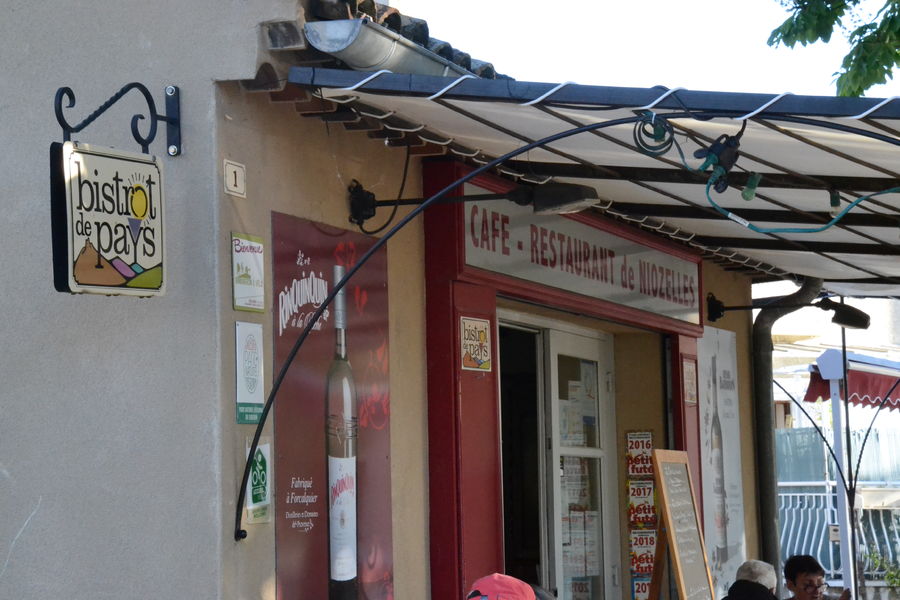
Right next door, the Bistrot de pays de Niozelles offers tasty, local cuisine. Its shaded terrace will welcome you for a gourmet break.
A small farmers' market takes place on Tuesday afternoons
The vineyard tour (PR) reaches the village of Pierrerue
Duration: 2h30 - 6 km - 189 m elevation gain - Yellow markings
Departure from the parking lot at the entrance to the village, in front of the multi-sports ground