
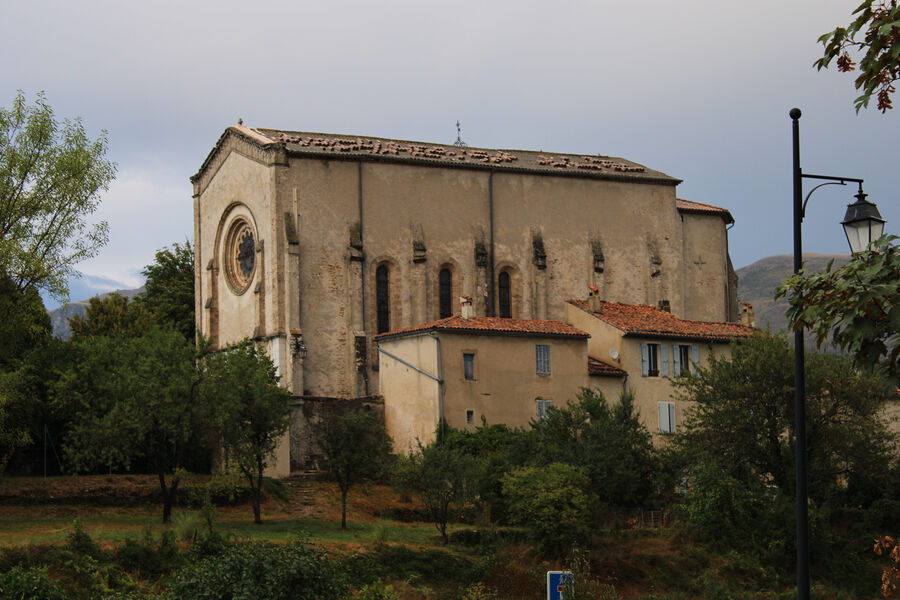
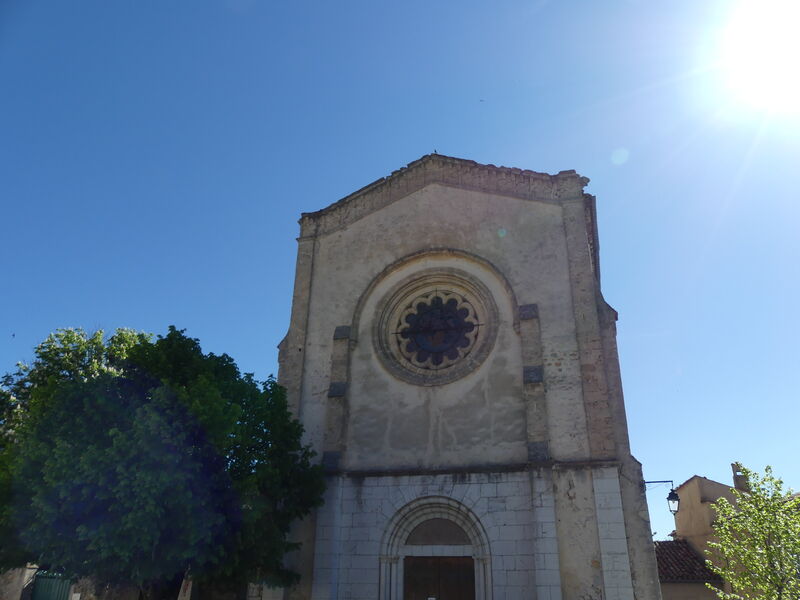
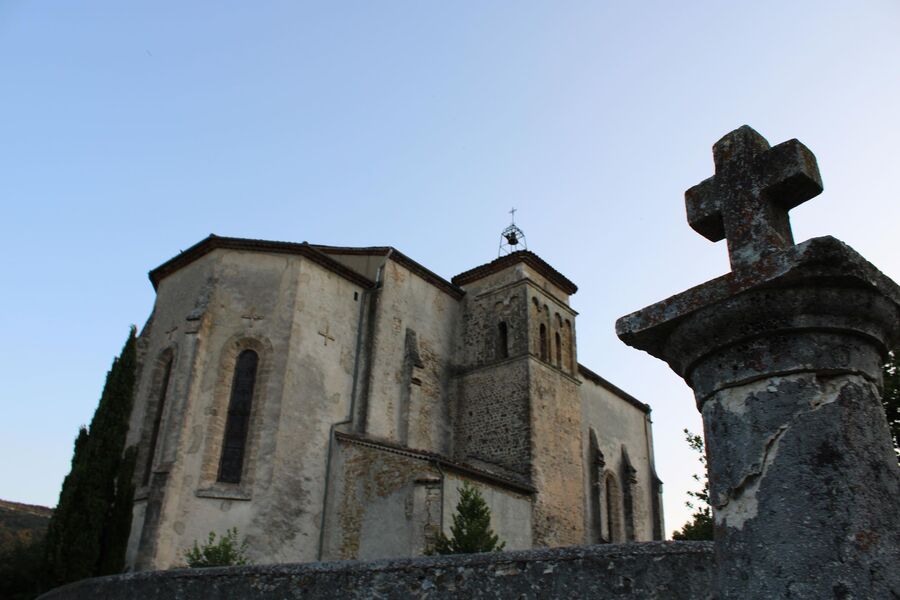
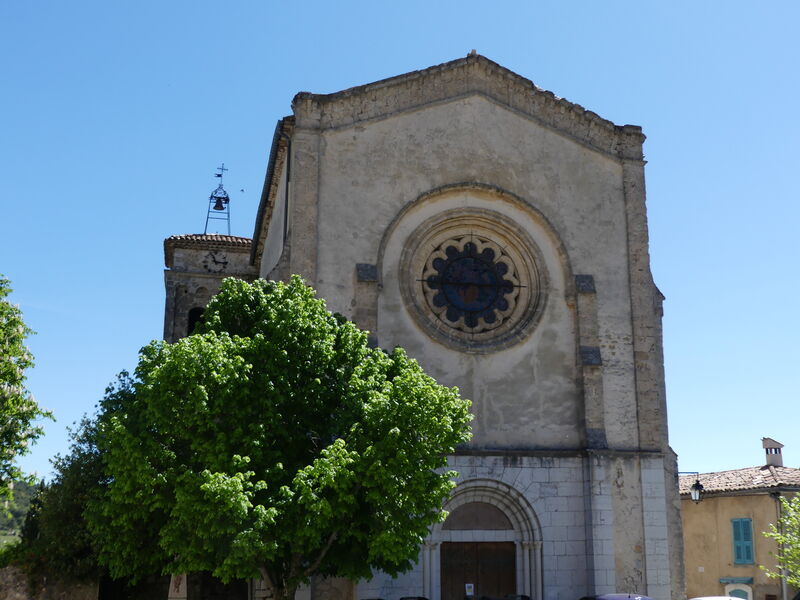
Although dating from the 11th century, the church was largely rebuilt during the 19th century. Its bell tower, erected in the 11th century and remodeled in the 12th century, remains the only element prior to this reconstruction.
Description
The first mentions of the church of La Palud appear in two papal bulls from 1114 and 1227: this is to confirm its dependence on the cathedral chapter and therefore on the diocese of Riez. Also mentioned in the pouillés of 1274 and 1351, the church, currently under the name Notre-Dame-de-Vauvert, presents characteristics that it mainly acquired in the XNUMXth, XNUMXth and especially the XNUMXth century.
The bell tower of the parish church of Notre-Dame-de-Vauvert is similar to that of the neighboring church of Notre-Dame-de-l'Assomption in Moustiers-Sainte-Marie: both bear witness to the first Romanesque art of the 1983th century with a small cubic apparatus and Lombard bands falling on pilasters. The bell tower of La Palud appears to have been reworked as early as the XNUMXth century (crowning reworked in tuff). It was provided with a bell tower in the XNUMXth century and, more recently, its roof was redone in XNUMX.
The current sacristy, a former seigneurial chapel whose keystone bears the Demandolx coat of arms, also dates from the 17th century.
During the 19th century, the poor and then very poor condition of the church was repeatedly reported.
After two unsuccessful tenders for repair work, the church was in danger of collapsing. The building was therefore partially demolished; however, the bell tower, the seigneurial chapel, and the old sacristy remain. The reconstruction work took place between 1867 and 1870 and was the work of the architect Chaix and the masons Joseph and Charles Trotobas. They gave the church its current general characteristics.