
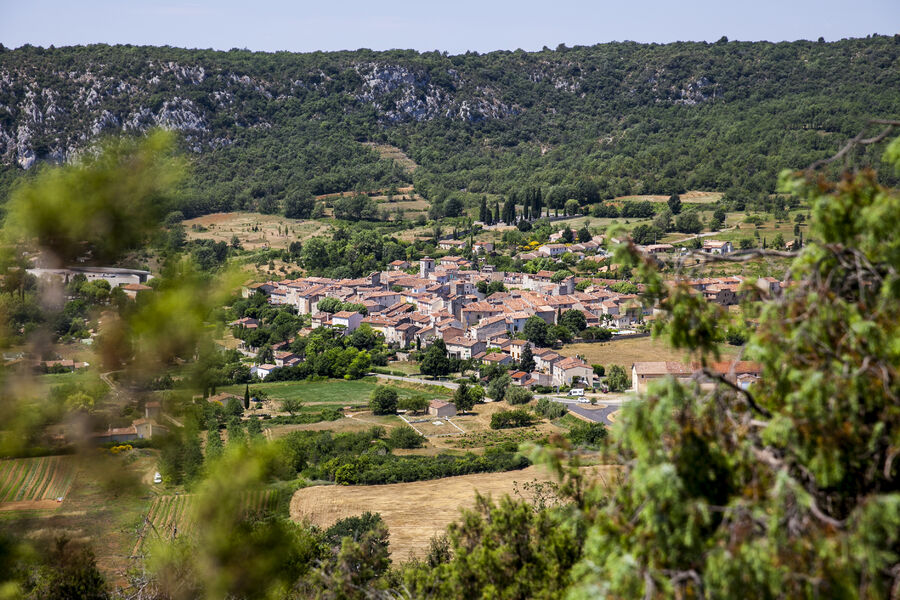
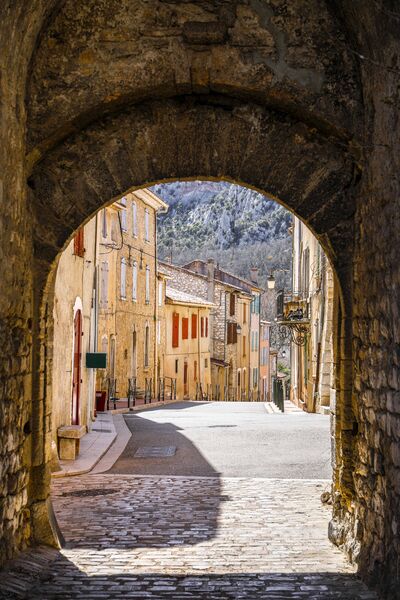
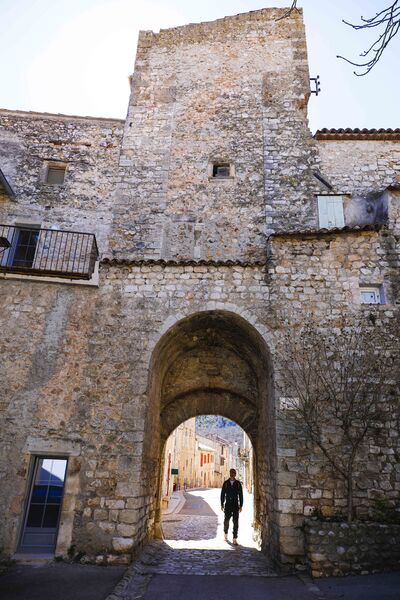
Situated in an amphitheater between the limestone cliffs and the Verdon, the current village was built in the 7th century around a solid defensive rampart comprising XNUMX crenellated towers and two fortified gates.
Description
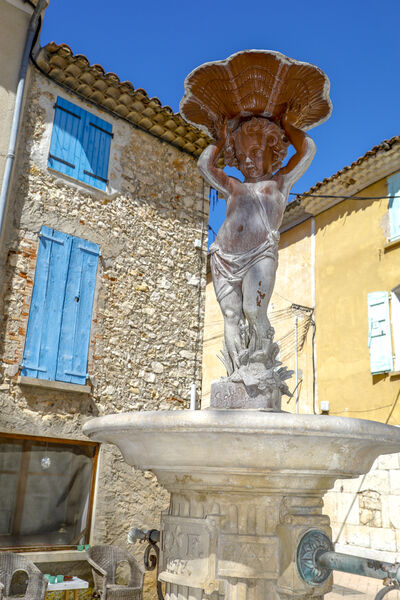
Formerly located on the rocky bar overlooking the valley and the Verdon, this barred spur was called "Castrum de Sancto Michele de Quinsono". In the 82th century, the inhabitants settled in the plain to build their homes behind a thick defensive wall. In the 1877th century, new buildings were constructed following the curves of the structure and according to the different communication routes. It was also at this time that wash houses and neighborhood fountains found their place in the village following the filling of an XNUMXkm canal which carried the waters of the Verdon from Quinson to Aix-en-Provence in XNUMX.
In 1946, a resident of Quinson, Bernard Bottet, reported the presence of the prehistoric cave of Baume Bonne to the scientific community. With his son Bertrand, they excavated the site for about ten years. From 1957 to 1968, Henry de Lumley and his team excavated most of the rock shelter, then in 1988 the archaeological excavations resumed under the direction of Jean Gagnepain and Claire Gaillard. Today, the town of Quinson has one of the largest Prehistory Museums in Europe, designed by Norman Foster, which offers its visitors an immersive, interactive and fun discovery experience...