
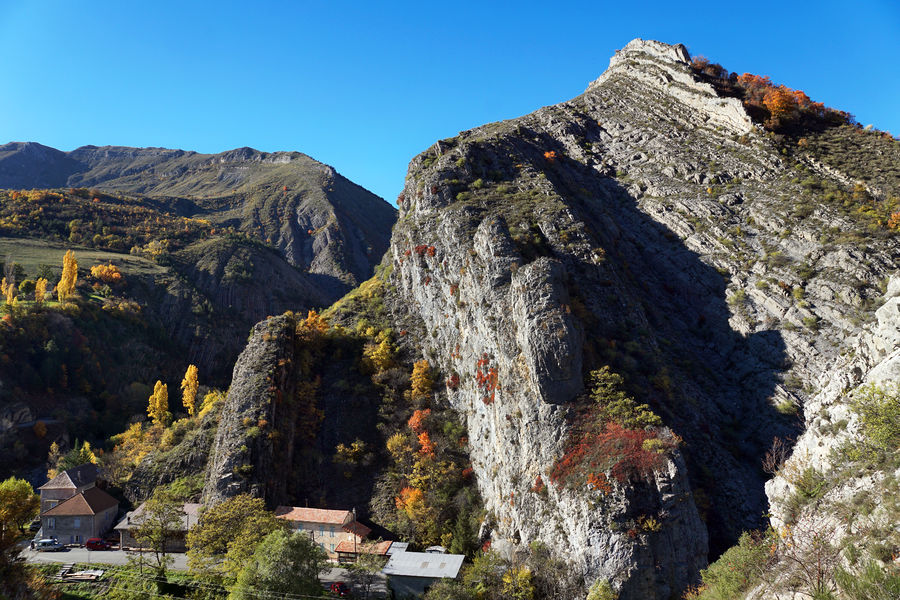
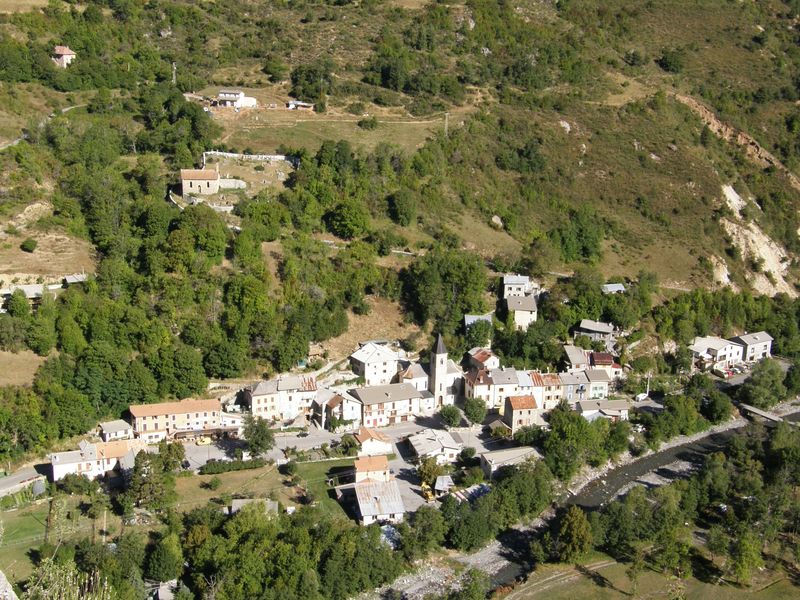
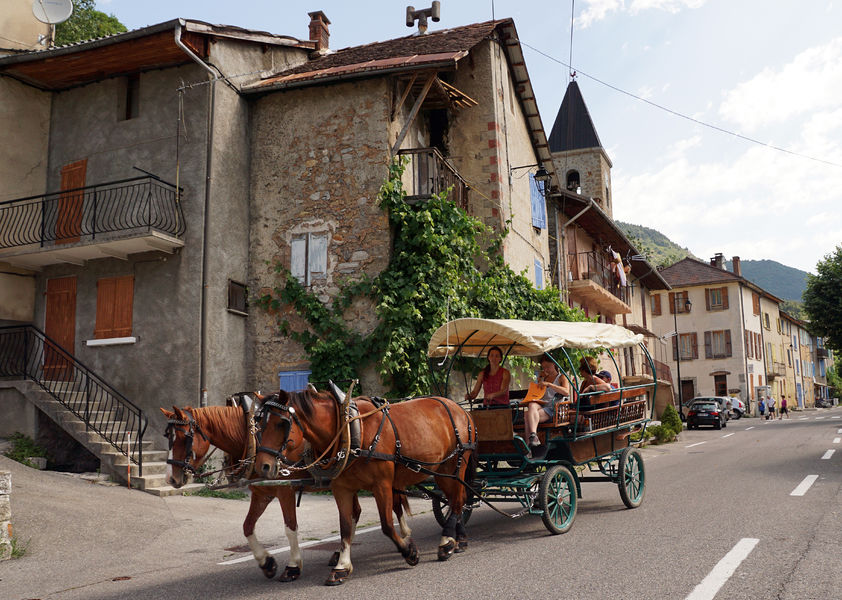
The village of Barles is ideally located on the edge of the clues of the same name. You will find vestiges of historical heritage in the village: the washhouse, the ruins of the castle, the church and its mysterious mailbox.
Description
Discover the pearl of Bès, with its bridge which crosses the Clues, taking the old mule path.
Barles is also an integral part of the Haute Provence Geological Reserve, the largest in Europe and a true open-air museum! Rocks, fossils, and surprisingly varied landscapes tell a story 300 million years old.
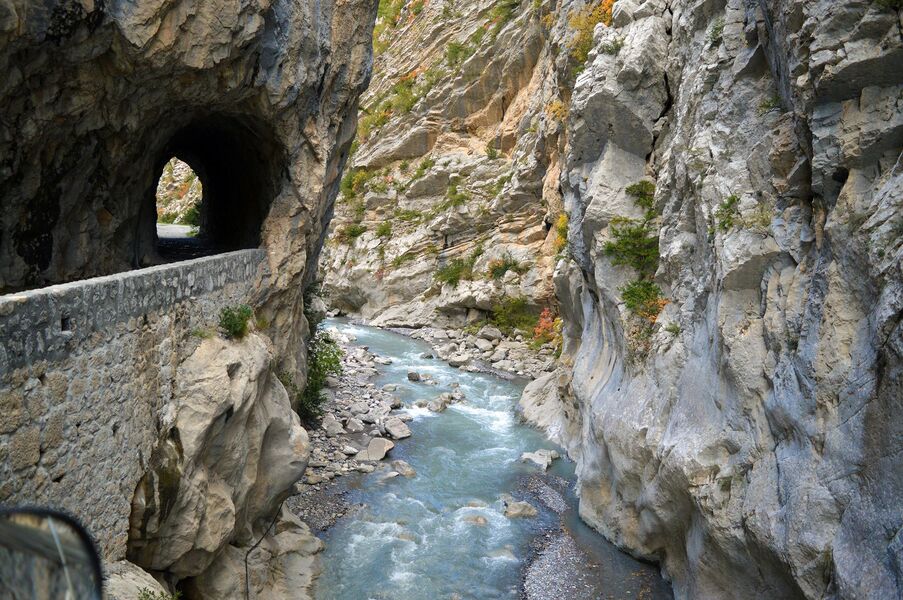
As you leave Barles, the gorges become so narrow that it is difficult for two cars to pass. The word "clue" comes from the Latin "clausus," meaning "closed." A "clue" is therefore an almost "closed" passage, generally opened by the undermining of a river. The "clues" of Barles were opened by the Bès River, in a limestone bar dating from the end of the Jurassic or the beginning of the Lower Cretaceous period, between 155 and 140 million years ago. The river carved its way through very thick vertical layers, taking advantage of the fragility of the rock.
At the entrance you will find a strange stone sculpture. It is one of the "sentinels" of the contemporary artist Andy Goldsworthy, who thus opens the path of the route of contemporary art and the Geopark.
At the gateway to Provence, the splendid rocky landscape of Barles follows the cool Bès River and is dominated by the impressive mountains overlooking the village. Barles and its gorges are ideal for geology enthusiasts, or simply for anyone looking for a refreshing, exotic break in nature.
Comfort and amenities
Services
Equipment
Rates / opening
Prices
Free access.