


“People of Ubaye, people of travel”
To better understand the links that have united Barcelonnette and Mexico since the Arnaud brothers settled there in 1805 and those that continue today with their descendants, a detour to this museum is a must.
Description
Established since 1988 in La Sapinière, a villa built in 1878 by Alexandre Reynaud on his return from Mexico, the museum showcases eclectic collections combining history, archaeology, local and exotic ethnography (America, Asia, Africa, Europe), fine arts, contemporary art
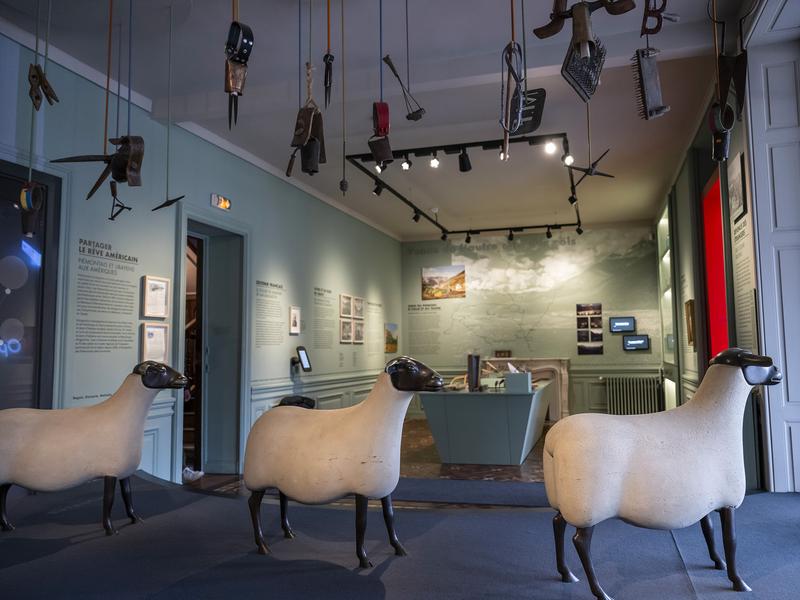
The dual representation of the theme of emigration to the Americas (Louisiana, Mexico) and the evocation of life in Ubaye through gestures and objects of daily life offer the discovery of a rural alpine society from the beginning of the 20th century.
Collections open to the world, the Americas (Mexico and Louisiana), China, Japan, India, Burma... but also to the Valley, its history and its rich heritage. Discover the fine arts collection with the paintings of Jean Caire (1855-1935), Marie Tonoir (1860-1934), Charles Bertier (1860-1924), Pierre Michel (1900-1984), the caricatures of Marguerite Reynaud (1888-1967) and the Gilles and Laurence Aillaud collection currently being built. The villa has retained its marquetry parquet floors, its Sarreguemines earthenware bathroom (1910), its Art Nouveau stained glass windows (the Poppies), and the smoking lounge.
Don't be surprised when you cross the Doric-columned porch of the Villa La Sapinière (1878), which has housed the Musée de la Vallée - Musée de France - since 1988, to come across objects from Asia, Africa and, of course, America.
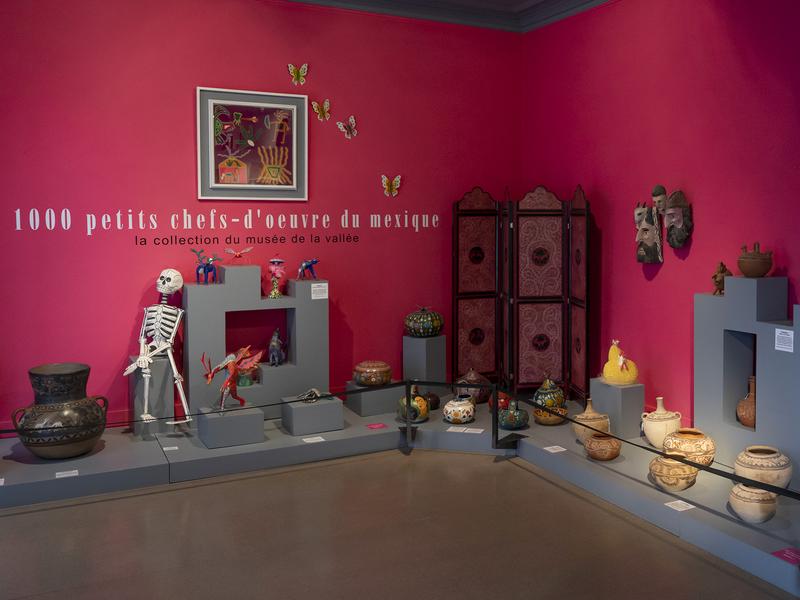
They all have a story, closely linked to the life paths of the inhabitants of Ubaye: 1000 small masterpieces from Mexico tell the popular culture of the host country of the Barcelonnette emigrants to Mexico who brought back the emblematic objects (metate, molinillo, serape or the cult of the Virgin of Guadalupe); statues and various works from China, Japan, Burma gathered by the traveler-naturalist from Barcelonnette Émile Chabrand (1843-1893) at the end of his world tour (1882) and placed in his recently reconstructed "cabinet of curiosities".
There are still eggs, a chimera, stuffed birds and fish, corals... which coexist with a samurai armor brought back from Japan.
The same cultural mix distinguishes the orientalist canvases signed by the traveling painter couple Jean Caire (1855-1935) and Marie Tonoir (1860-1934), who also responded to the call of the Orient (stays in Biskra, Algeria).
Comfort and amenities
Equipment
Rates / opening
Prices
● Full price: €5
● Reduced price (ages 10 to 20): €3
● Group package (from 10 people): €4 / person.
● Free for children under 10
Opening
Hors vacances scolaires, du mercredi au samedi, de 14h à 18h.
Vacances scolaires (Toussaint, Noël, hiver, Pâques, printemps) toutes zones, du mardi au samedi, de 14h à 18h.
Du 30 juin au 6 juillet, du mardi au samedi de 14h à 18h.
Du 7 juillet au 31 août, tous les jours sauf le dimanche, de 10h à 12h et 14h à 18h.
Le musée est fermé le 14 juillet, le 25 décembre et le 1er janvier.
Fermeture annuelle du 3 novembre au 21 décembre inclus.