
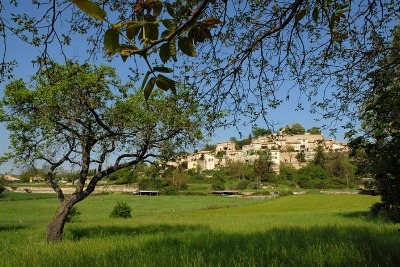
Classified as a "Village and Town of Character", the locality takes its name from that of the Roman goddess Mana Genita, who presided over funerals.
Description
The titles of Mane have a very respectable degree of antiquity since it was around the year 55 of the Christian era that Rome made an imperial choice towards its site, that of creating a provincial market (Forum Neronis) which had to be placed in a suitable proximity to the via Domitia, which crosses the town. The High Middle Ages endowed the site with everything, or almost everything, which today makes its high architectural value.
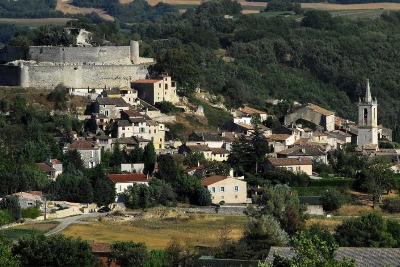
Centuries pass and Mane gradually takes on its current appearance, of which its inhabitants are so proud, because Mane is not a museum village. The first image that presents itself to the traveler who approaches Mane is a shaded peak. Two silhouettes identify it: one, the Citadel, built in the 12th century and the only feudal fortification to remain intact in Haute-Provence; the other is its characteristic and recently restored bell tower.
All around Mane, scattered throughout its territory, are vestiges of history such as, of course, the Roman Bridge which led pilgrims with their feet above water from the Laye to the Priory of Salagon, a historical monument built on Roman ruins. It now houses a museum and an ethnological garden. Not far away, also listed, is the Château de Sauvan, built in the 18th century as a replica of the Petit Trianon, rich in period furniture and gardens.
Also everywhere are the "pointed huts," which are improperly called Bories. Small masterpieces of rural architecture, these dry-stone huts demonstrate the remarkable skill of the builders: the stones are assembled without any arch or binding. Some attribute their origin to the Gauls; they date back more prosaically to the 18th and 19th centuries.
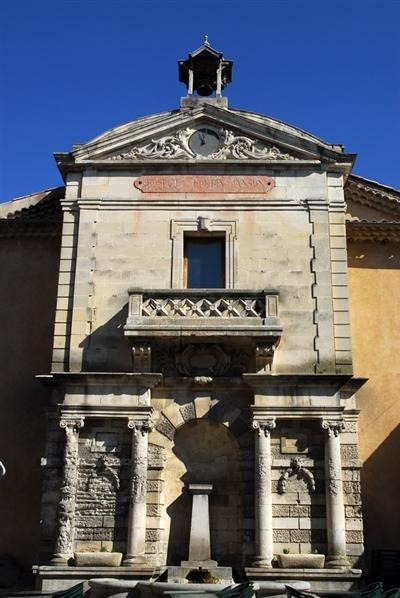
In Mane, built with the skill of master masons, one is enchanted by the multitude of streets and cobbled alleys, the old facades and doors, the fountains, pontoons and other architectural curiosities such as the old medieval market.
Mane was also a rebel. For example, in 1851, in the heart of the village, the departmental insurrection against the coup d'état of Louis Napoleon Bonaparte began.
The most illustrious of the country's sons, Henri Laugier, who was Deputy Secretary General of the UN, co-author of the Charter of Human Rights and first president of the CNRS, must proudly watch over the destiny of his village somewhere.