

Dolphin
A hilltop village in the heart of Haute-Provence
Dauphin overlooks the Largue and Laye plains. This listed village charms visitors with its cobbled streets, medieval ramparts, Saint-Martin church, and panoramic views of the Luberon. Combining Roman ruins, Provençal charm, and local craftsmanship, Dauphin offers an authentic immersion in Haute-Provence.
Dauphin is at the crossroads of history
In Roman times, the Via Domitia, known here as the Seinet Way, which connects Spain to Italy, crossed it. Its surroundings were inhabited and today's farms, which replaced the Gallo-Roman villas, have revealed over time many precious remains: mosaics, an aqueduct, inscriptions, pottery, etc.
It was only later, in the Middle Ages, that Dauphin came to occupy the heights already crowned with a fortified castle, to protect himself from the looters who were then roaming the region. From this period, the village retains the towers and part of the ramparts of the fortified enclosure.
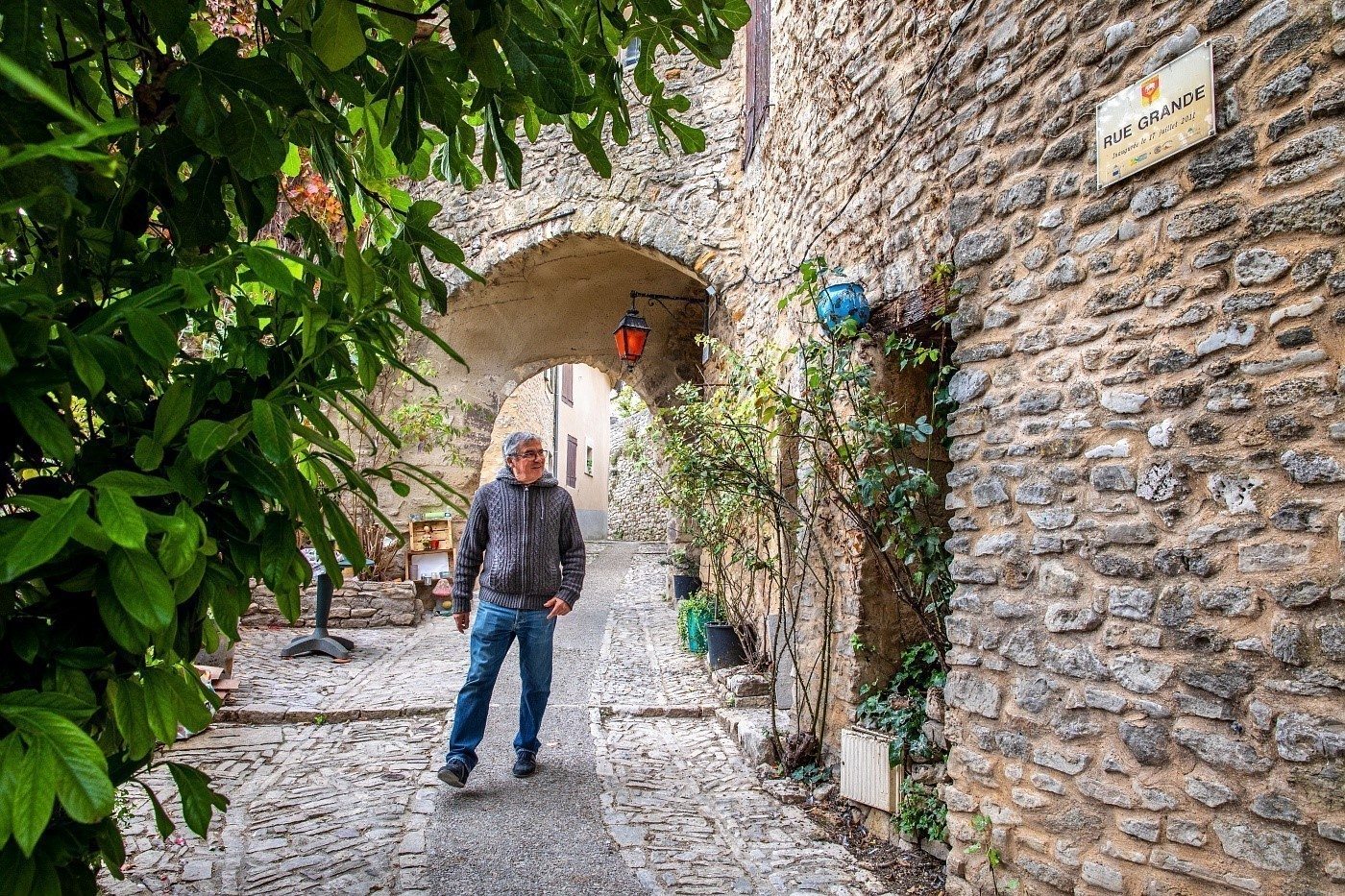
Once past the city gates, you can stroll for a long time along the cobbled streets that wind under covered passages.
You will discover the beautifully preserved 16th and 17th century facades. As you wander through the streets, you will look for corner niches, mullioned windows, and entrance doors with sculpted frames. All the charm of Dauphin is there, in the color of the stone - a beautiful limestone taken from the neighboring quarries -, the care taken with the decor, the constant reminder of a long history that marks the smallest building.
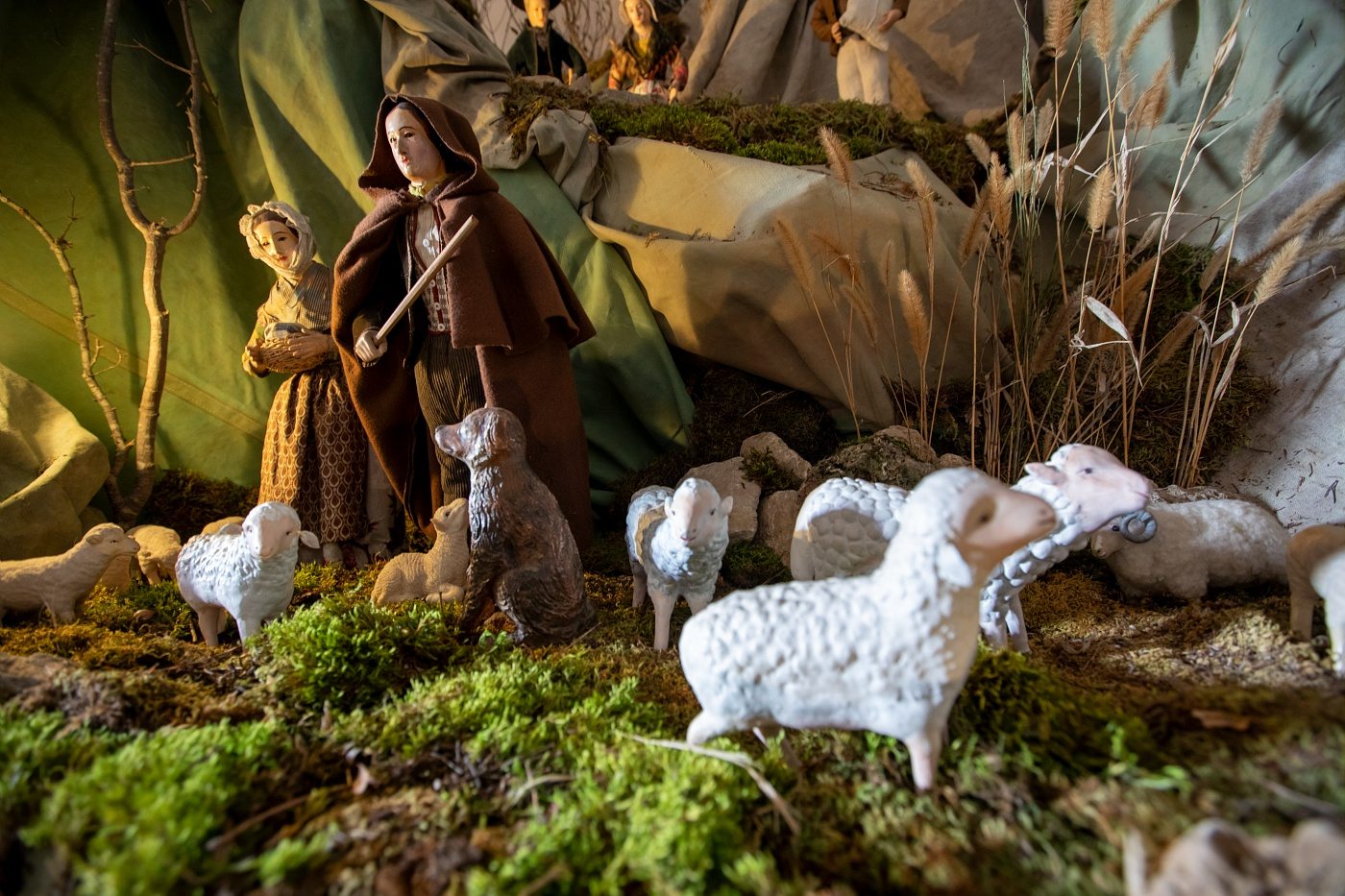
And you won't want to miss a stop at the Saint-Martin church, which occupies the site of the castle chapel and dates from the 12th and 16th centuries. It has a remarkable ribbed vault, forming a rose window, and has a pretty bell tower with green scale tilesAt Christmas time, one of the most beautiful is exhibited there cribs church in the region dressed santons dating from the 18th century.
Access and location
Join Dauphin
Dauphin is easily accessible by car thanks to its proximity to major highways. From Forcalquier, follow the D13 to Mane then the D5. From Manosque, take the D907 to Saint-Maime then the D5. A51 motorway, Manosque exit.
By train
The nearest train station is in Manosque-Gréoux-les-Bains (TER Provence-Alpes-Côte d'Azur), approximately 15 km away.
By bus
Regional lines connect Dauphin to Manosque, Forcalquier, and the surrounding villages. Check with the South Region for timetables.
What to do in Dauphin?
As you stroll through the cobbled streets, you'll discover vaulted passages, corner niches, and elegant facades. The local limestone, in light tones, illuminates each stone and tells the story of the place.
Craft enthusiasts will find pottery, ceramics, ironwork and turned wood objects, made on site by passionate artisans.
When to come to Dauphin?
Here are some highlights:
- Summer is particularly suitable for concerts in the church, particularly around the organ, as well as for guided tours.
- In Winter Soak up the Christmas spirit in the Church of Saint-Martin, where the oldest historical nativity scene in the Forcalquier region is on display. Eleven figurines, preserved in their original state, are a magnificent testament to the clothing styles of Dauphin in the 18th century. It is part of the living tradition of the "Ronde des Crèches".
Villages and towns of character
15 of our villages have received the label "Villages and Cities of Character"Each one, with its unique heritage, invites you to a discovery full of charm and history.
Answers to your questions
Other places to discover