
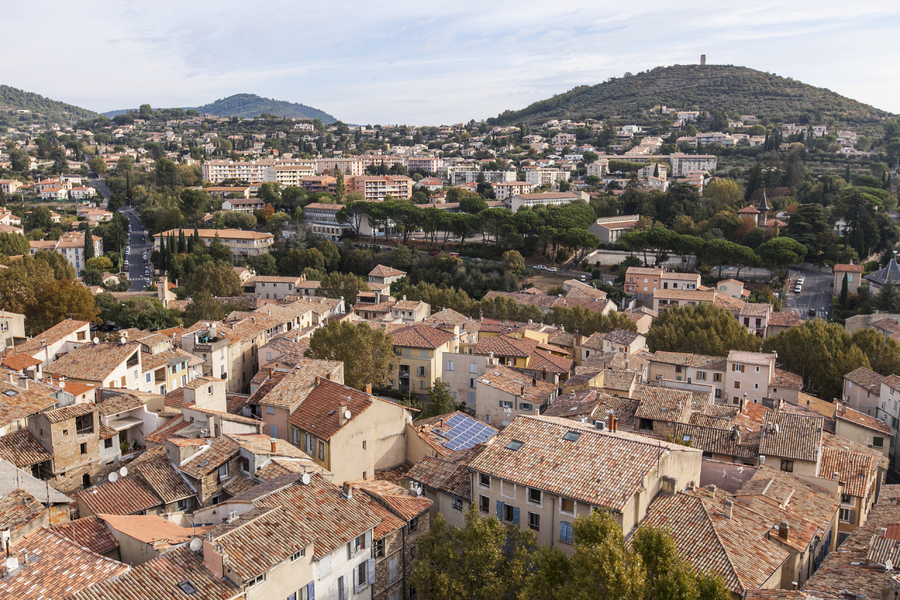
“Le Pays de Manosque” tourist itinerary: Between historical heritage, cultural discoveries and local riches.
Description
Wonderful viewpoints are offered to you all along the circuit made up of open and hilly landscapes, true invitations to the pleasures of the senses.
Villages and hamlets alike offer ample opportunity to experience the tranquility of Provençal life.
Manosque
• Historic city center
• Saunerie and Soubeyran Gates
• Saint-Sauveur Church
• Private mansions
• All Aures Hill (chapel)
• Mont d'Or Hill (remains of a 10th-century castle)
• La Paraïs, the house and garden of the writer Jean Giono (opening on 23/05 2026)
• L'Occitane factory, garden and boutique
• Vannades lake
• Olivette Mill
• La Thomassine: orchards and conservatory gardens
• Randoland (fun tour circuit to discover with the family)
Itinerary:
From Manosque, take the D4096 towards Forcalquier. Continue to Volx, a village perched on its rocky outcrop above the wide Durance plain, at the eastern edge of the Luberon. Take advantage of this stop to visit the Olive Tree Ecomuseum and its shop.
Volx
• Olive Tree Ecomuseum (museum, shop)
• Church of Our Lady of the Rock (12th century)
• Trou de la Capellanne (natural caves, access near the olive groves)
• Luberon Mill
Continue your route along the D13 road to the charming village of Saint-Maime, located in the Pays de Forcalquier, sheltered by a rocky ridge.
Saint Maime
• Saint-Maxime Church
• Sainte-Agathe Chapel (12th century)
• Mining and Miners Museum
Continue along the route towards Dauphin, a small hilltop village, typically Provençal. Continue on the D13 which leads to Mane, classified as a "Village and Town of Character". Don't miss the Priory of Salagon, a must-see for both its Romanesque architecture and its garden.
Dolphin
• Saint-Martin Church (15th c.)
• Village
• Covered ramparts, towers and gates
• Classified as a “Village and City of Character”
Mane
• Salagon Priory
• Romanesque church
• Ethnobotanical gardens
• Château de Sauvan (18th century)
• Village classified as “Village and City of Character”
• Village on the Way of Saint James
Compostela.
Continue the circuit along the D4100, towards Apt.
A few hundred meters to the left, stands the Château de Sauvan (18th century). Take the D4100 road, turn left and continue along the D105 and D505 towards Saint-Martin-Les-Eaux, a new little hilltop village in a verdant setting.
Saint-Martin-Les-Eaux
• Saint-Martin Church (12th c.)
• Castle (current Town Hall)
• Fountain with spouts
• Hike to the sulfur spring
Head back towards Manosque via the D505, D105, and D907 roads. As you approach the town, turn left onto the D6 to reach Pierrevert, a stone village with medieval charm. The town is known as the wine capital of the urban area for its delicious wine labeled "AOP de Pierrevert."
Cross the village via the D105 and continue towards Sainte-Tulle, an ancient Gallo-Roman city. The circuit ends with a return to Manosque via the D4096.
Pierrevert
• Saint-Martin Church (12th c.)
• Village, old gates, old ramparts
• Vine and Wine Museum (13th century)
• Winegrowers' Trail (4,5km hike around the village)
• Luberon Golf Course (18 holes)
• “Petra Viridis” Cave
• Domaine de La Blaque
• Régusse Estate
Sainte-Tulle
• Church of Notre-Dame de Beauvoir (16th century)
• Crypt-chapel (11th/12th c.)
• Village and its long covered passages
• Covered wash houses (18th century) and fountains (17th century)
• Clock Tower (16th century)
• Antiphonary (collection of religious songs on vellum from the 18th century)
• Lookout on the theme of hydroelectric energy
• 3 M Museum (Fashion, Motorcycles and Military)
Type : Loop
Distance : 120km
Duration : 0 min
Comfort and amenities
Services
Equipment
Rates / opening
Prices
Free access.