
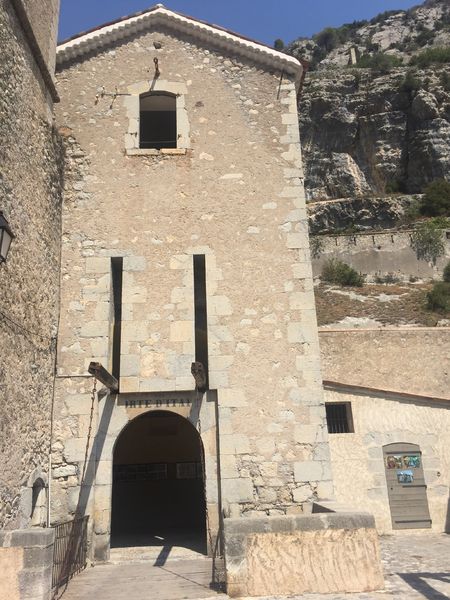
1 Royal Gate, Machicouli Redoubt
Main entrance to the village since 1658 with an 18th-century machicolated redoubt pierced with openings on the road side. The machicolations allowed all kinds of projectiles to be thrown at attackers.
Description
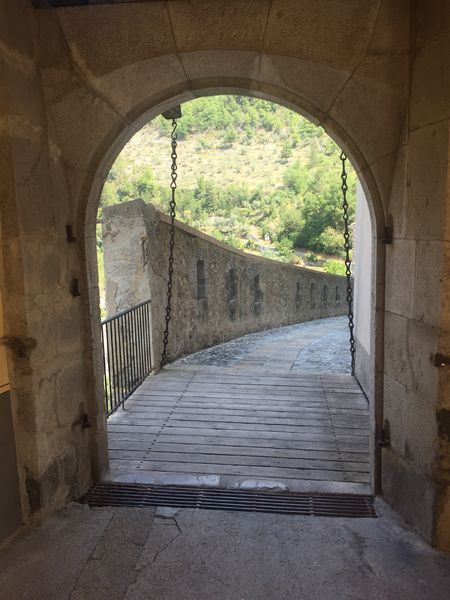
2 Drawbridge and towers
In 1690, two rounded towers were built on either side of the bridge, as well as a machicolated bretèche located above, receiving the two arrows of the drawbridge, known as the "basseau", which was raised at night until the middle of the 2th century.
3 Guardhouse
This large room once allowed the soldiers guarding the entrance to the village to communicate with the patrol path.
4 Prison
This police room was used to isolate suspects and petty criminals or as a "sobering up" room.
5 Commander of the Place Hotel
Residence of the officer who commanded the stronghold or governor. Monumental double-leaf door with glass transom,
Genoese with triple rows and rounded roof angles symbolizing the homes of the nobility.
6 Bastioned tower of La Portette
This bastion and the barracks bastion were artillery towers. The roof, quite exceptional in Vauban's constructions of this period, characterizes these two bastions.
7 17th century balcony
Wrought iron balcony characteristic of noble homes. This hotel was that of the Counts of Grasse Briançon.
It has been remodeled but it nevertheless shows the poor fortune of the rural nobility.
8 Hotel of the Barons of Glandèves
The Glandèves were lords of Entrevaux until 1542 and kept this hotel until the Revolution. With its triple-tiered Genoese windows, large and numerous windows, and monumental staircase, this hotel was transformed into a barracks in 1823. In front, on the rampart side, is the "barracks bastion."
9 School of Charity
Known as "Brothers' Schools," they were created in the 17th century for the education of boys. They served as barracks during the Revolution.
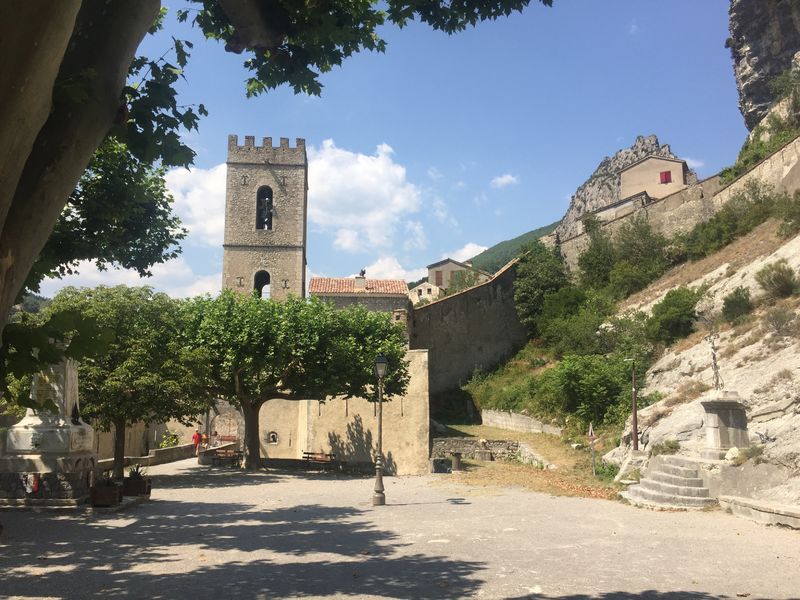
10 Cathedral
Built from 1604 to 1667, in Provençal Gothic style with a Baroque heart, it is dedicated to “Our Lady of the Assumption”.
Located at the eastern end of the city, it has been part of the fortifications since the end of the 17th century.
11 Porte d'Italie
A classic point of attacks, including that of the troops of Charles V in 1536.
This gate, a weak point, was powerfully fortified by Vauban: guardhouse with watchtower (of which only traces remain), drawbridge, artillery mouths.
12 Double horn
This rampart (triangular in shape in M) protected the first drawbridge, itself overlooked by a wall of riflemen and Fort Pandol. The so-called "path of the olive trees" led to Italy and was an invasion route for the
Savoyard troops.
13th Chapter of Canons
The canons assisted the bishop in his duties. The door is in the Renaissance style, with keel-shaped elements carved on the uprights.
14 Bishop's Palace
The bishop's residence within the walls. Note the triple-row Genoese window, the double-leaf door topped with a glass transom, and the large windows. The bishops were all members of the nobility.
15 Renaissance Gate
Beautiful 15th century door, with ogee-shaped stone lintel (late Gothic, early Renaissance).
16 Clock Tower
With its wrought iron bell tower, classic in Provence.
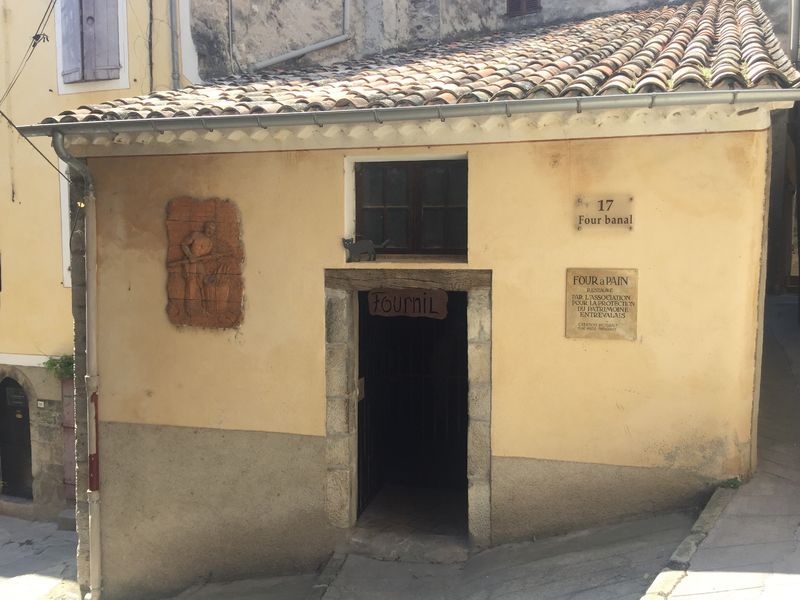
17 Communal oven
Bread ovens were generally owned by lords, and their use was subject to a fee, hence their name. Individuals who owned an oven still had to pay a fee to the lord.
18 Medieval shop
Characterized by the two merchandise displays on either side of the gate. Many shops have been transformed, and you will find traces of them throughout the streets.
19 Former St-Jacques hospice
In the Middle Ages, the hospice served as both a hotel for travelers and a care facility for the sick. It served as a hospital until the 1960s.
20 Porte de France
With drawbridge and adjoining guardhouse.
22 Weapons Room
Reserve store, armory.
23 Access to the citadel and the Powder Magazine Museum
To reach the fortress: 25 minutes of walking, 800 m of path divided into 9 successive ramps, 156 m of elevation gain.
The Powder Magazine Museum traces the village's military history. Its 58 square meters could hold 2 tons of powder, which was far too much for Entrevaux and extremely dangerous.
Type : Marked roaming
Distance : 0.915km
Duration : 1h
Difficulty : Easy
Rates / opening
Prices
Free access.
Opening
All year round, every day.