
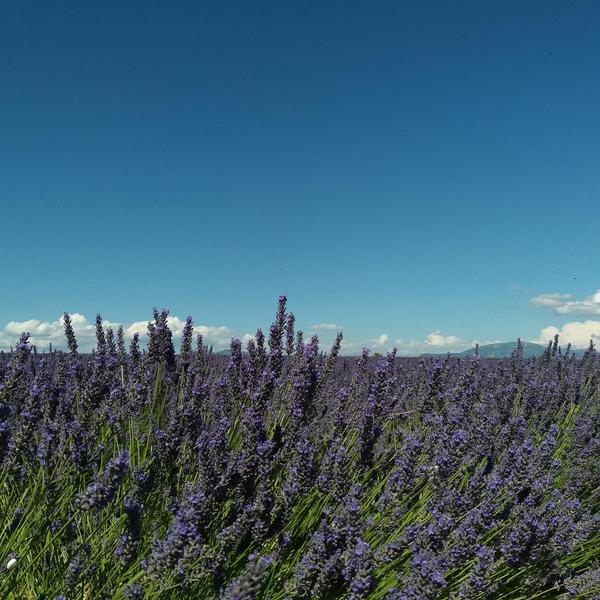
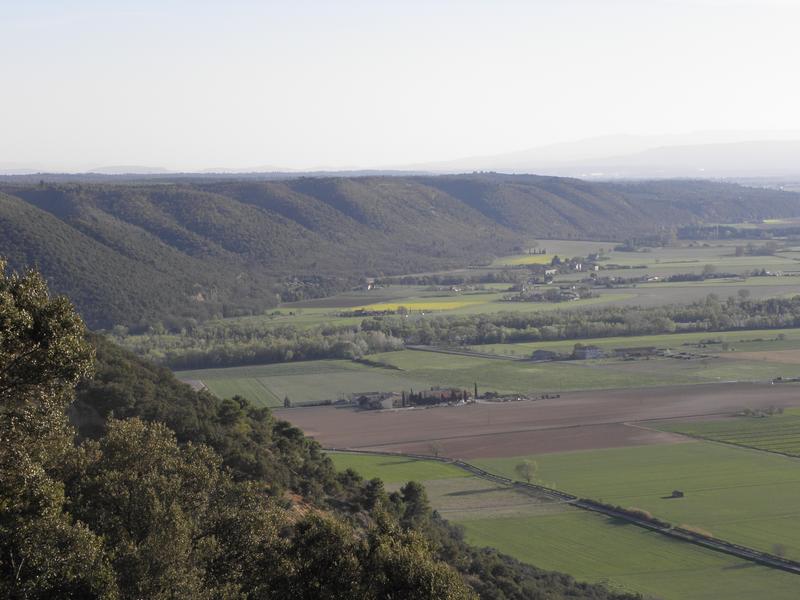
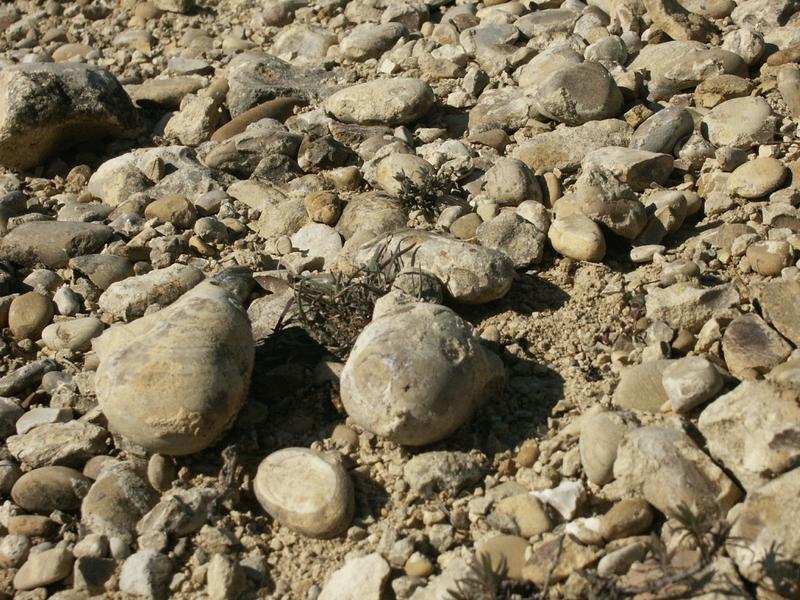
A vast sea of rolled pebbles, the Valensole Plateau is the region's "breadbasket." Recognized as one of the largest plateaus in France, it lies between the Durance and Asse, near the Verdon Gorges and its lakes.
Description
Built at an altitude of 590 meters, the village of Valensole gave its name to the entire plateau. With the geometric alignment of the lavender plantations, the demarcation of the fields highlighted by almond trees, this landscape is striking! Covering more than 800 km², the commune of Valensole and its plateau of nearly 12.700 hectares is one of the largest communes in France! This vast territory is bordered to the north by the Asse, to the south by the Verdon, to the west by the Durance and ends to the east on the foothills of the Montdenier massif.
In addition to lavender cultivation, this land is ideal for cereal cultivation, including the famous durum wheat, olive trees, truffles, and almonds. The king of the plateau, the almond tree generated great profits in the 19th century. Established in Provence since Antiquity, it heralds the arrival of spring with the early blooming of its flowers. The princess almond, the finest, is highly sought after in pastries and confectionery for the production of calissons and nougat, which are prepared with the exceptionally high-quality lavender honey from the plateau!
For several years, before the lavender flowers bloom, we have noticed the presence of clary sage, a biennial herbaceous plant used for its aromatic and medicinal qualities. Viticulture, which occupied almost 600 hectares in the mid-XNUMXth century, represented one of the main economies of the commune. Following the phylloxera crisis and the vagaries of history, vine cultivation declined to only survive in the communes of Gréoux-les-Bains and Quinson. The very particular quality of this terroir, with its half-Mediterranean, half-Alpine climate, gives rise to high-quality wines.
Depending on the season, the plateau takes on different aspects. The snow-covered peaks and almond trees in bloom in March give way in July to the blue of lavender and the gold of wheat. In November, the ochre of the plowed land contrasts with the pure blue winter sky. Numerous cabins and dovecotes bear witness to the richness of this small local heritage.
This very typical soil is made up of a thick layer of conglomerate formation sometimes exceeding a thousand meters thick which is composed of a succession of pebble puddingstone banks, with intercalations of sand or sandstone and silt, this is the "Valensole complex" so dear to geologists. This heterogeneous formation plays an important role for the vegetation, allowing the alternation of arid and humid zones. Finally, the development of its agriculture is particular since it is the only open and vast space in the Verdon.
We can thus distinguish on the Valensole plateau:
• Meadows or lawns, made up of annual herbaceous plants, the cozy cradle of Ophrys, small orchids from the Mediterranean region.
• The garrigue formed of small low bushes and aromatic plants.
• The maquis, an area of shrubby or bushy species, generally prickly.
• Woods and forests, dominated by holm oak and Aleppo pine.
From the Valensole plateau, you can admire the entire chain of the Pre-Alps, the Devoluy massif, Mont Denier, Chiran, Moure de Chanier, the Lure mountain, Mont Ventoux, the Sainte Victoire and Sainte Baume massifs.