


The Ichthyosaurus of La Robine is approximately 185 million years old.
Its name comes from the Greek terms ikhthus (fish) and sauros (lizard). The Ichthyosaurus, in fact, looks like a fish but belongs to the order of reptiles.
Hike 1h30, 4km.
Description
The La Robine ichthyosaur was one of the first sites in Europe where a skeleton was preserved and protected in situ. It can be discovered at the end of a hike that is accessible to all and very pleasant.
The La Robine Ichthyosaur is approximately 185 million years old and is of great scientific and educational interest. Its name comes from the Greek terms ikhthus (fish) and sauros (lizard). While it does indeed resemble a fish or marine mammal, it is actually a reptile. It once lived in the sea that covered the region. Ichthyosaurs disappeared around 90 million years ago, leaving no descendants.
After its death, this ichthyosaur was covered in a bacterial film that protected its skeleton, while sedimentation on the ocean floor only resumed several thousand years later. The mud then formed a protective matrix before transforming into rock.
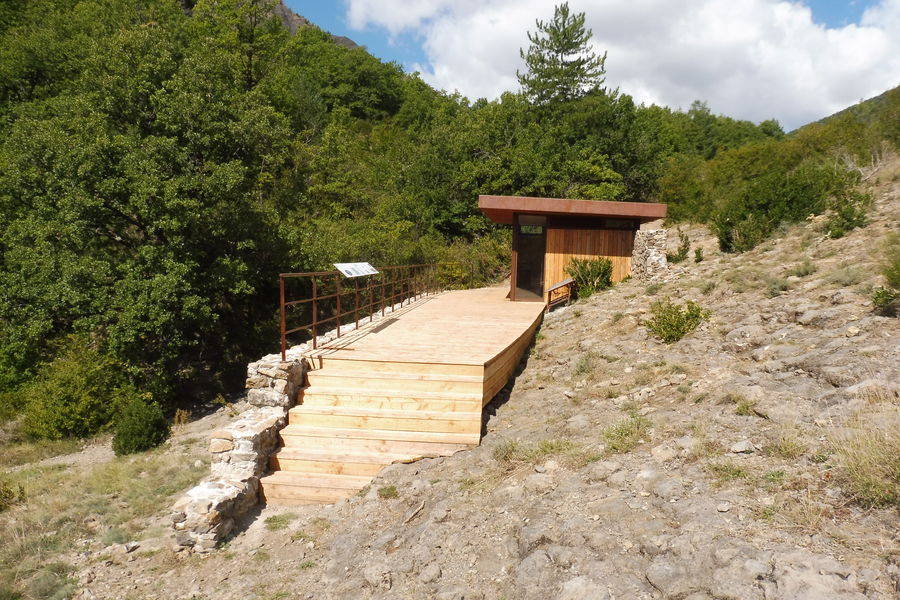
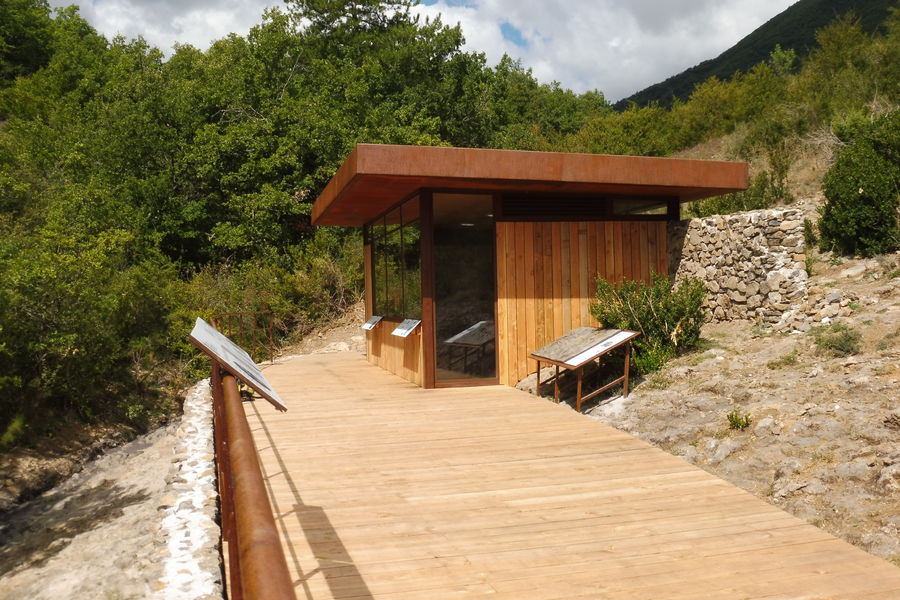
Enhanced by a new protection and mediation infrastructure, this listed site is managed by the Haute-Provence National Geological Nature Reserve and can be visited freely all year round.
Comfort and amenities
Services
Equipment
Rates / opening
Prices
Free access.
Opening
Open all year round.
Subject to favorable weather conditions.