
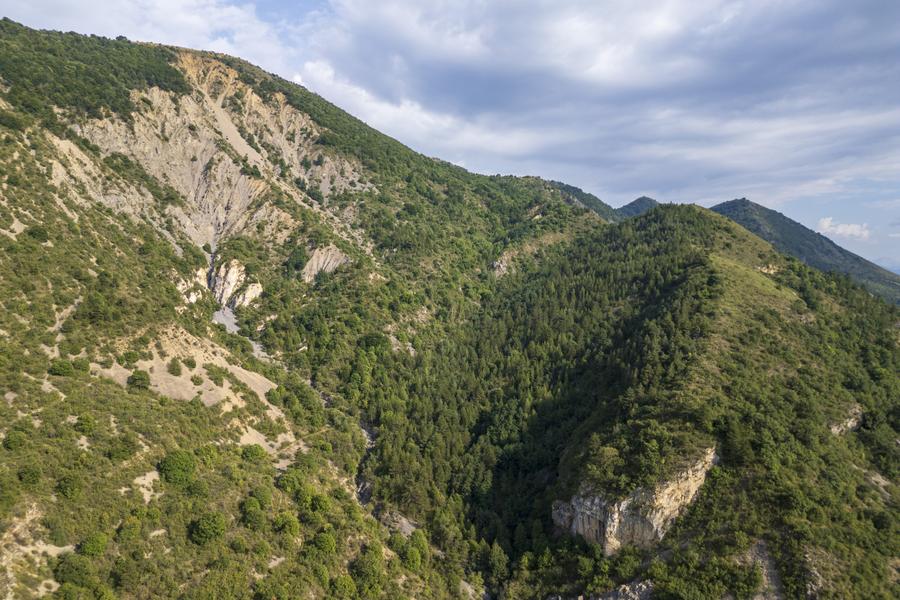
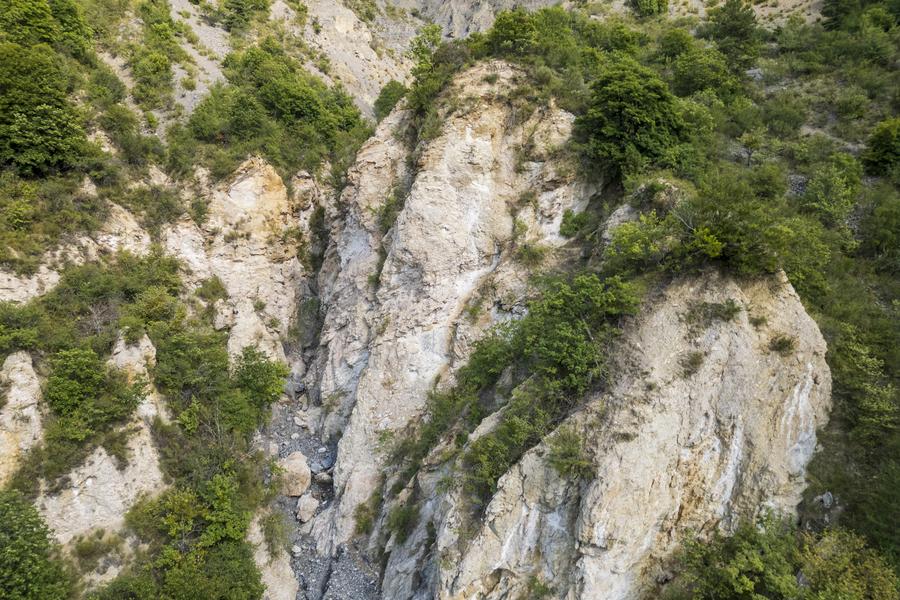
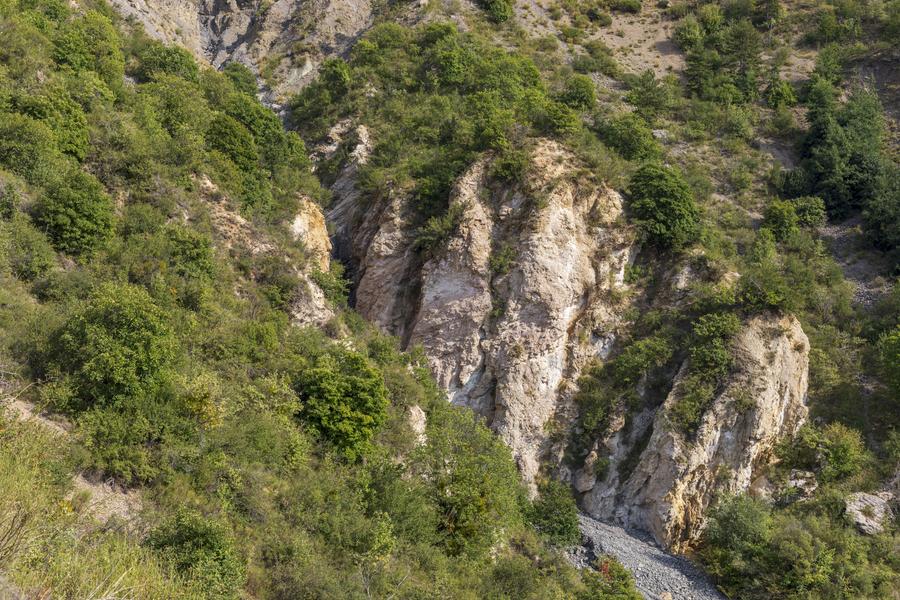
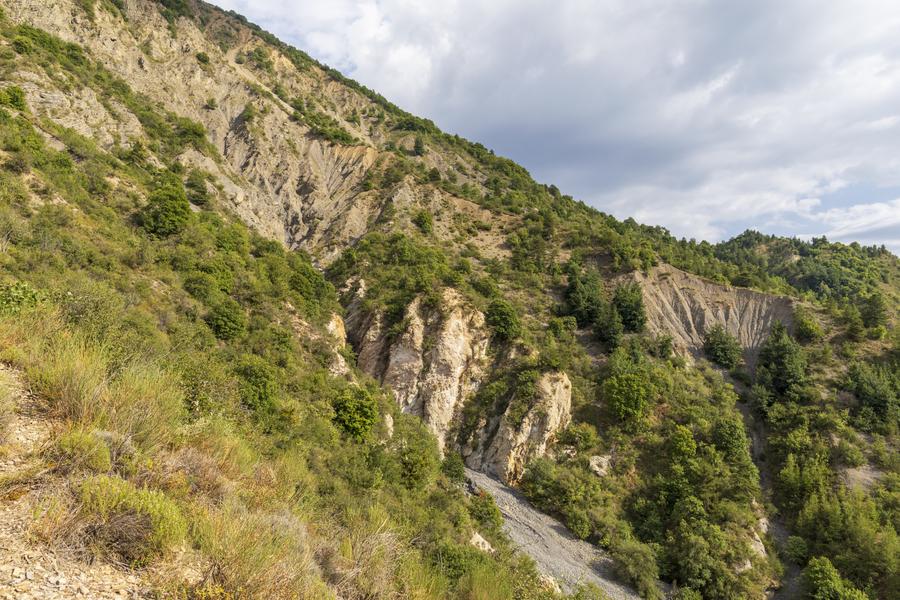
In Thoard, in the 19th century, the Siron quarry was well-known. The extracted gypsum was transported to the village plaster factory. It was used for masonry, decoration, etc. The fireplace of the old Château des Barras boasts the most beautiful plasterwork in Provence.
Description
Gypsum, which is used to produce plaster, appears here and there on the hillsides of the Haute-Provence Geopark. The Siron quarry remained in operation until 1940.
The built heritage of Haute-Provence is inseparable from its geology. Thus, plaster has always been widely used in this region due to the numerous gypsum outcrops nearby.
Formed around 220 million years ago, gypsum is a soft mineral composed of calcium sulfate dihydrate. It played a major role in shaping the landscapes of the Haute-Provence Geopark, long after its accumulation, acting as a "soap layer" (tectonic sliding surface).
Heated in a kiln, it loses some of its water and turns into plaster. In Thoard, among several quarries attested in the 19th century, that of Siron was the best known. The stone was extracted there with picks and mattocks and then transported to the village to the plaster factory. The plaster was used for masonry, coating, and decoration. In Thoard, the fireplace of the old Château des Barras is one of the most beautiful plasterworks in Provence.
Rates / opening
Prices
Free.